

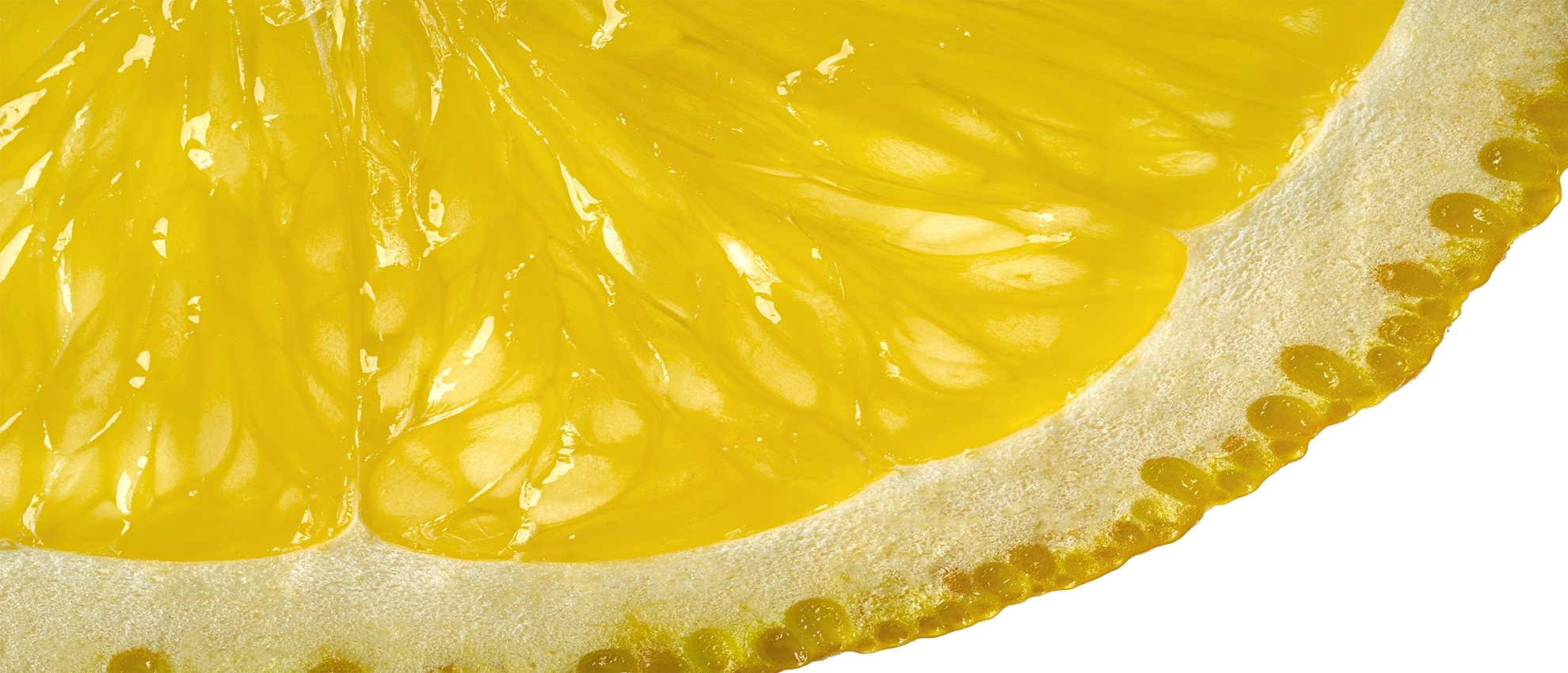
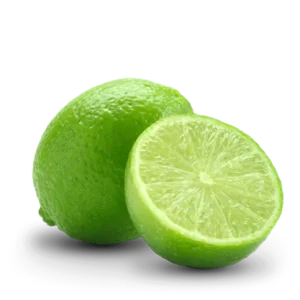
Lemon, or simply lime, is the fruit of the lemon tree and belongs to the citrus family. Although the peel and pulp of lemons are especially used in cooking, lemons are mainly cultivated for their juice. Lemons contain a high amount of citric acid, which gives them their sour taste. The lemon tree is a shrub that can grow up to four meters in height, and its cultivation is only possible in warm regions (Mediterranean climate).
India is the largest producer of lemons in the world. It is followed by Mexico, China, Argentina, and Brazil, respectively.
The Main Molecules Constituting Lemon Flavor
| No. | Molecule | Persian Name |
|---|---|---|
| 1 | Citral | سیترال |
| 2 | Limonene | لیمونن |
| 3 | α-Pinene | آلفا پینن |
| 4 | β-Pinene | بتا پینن |
| 5 | γ-Terpinene | گاما ترپینن |
Citral is a natural aldehyde with a lemon aroma that is found in the oils of plants such as lemongrass, lemon, and lemon verbena. This compound is an isomeric mixture of two compounds, geranial and neral, and due to its aroma and flavor, it is widely used in the food, fragrance, and cosmetics industries.
Natural Sources: This compound is the main component of lemongrass essential oil (approximately 80%) and is also found in citrus oils, lemon myrtle, and lemon balm.
Applications and Uses
Flavor and Aroma: Due to its strong lemon aroma, citral is a key ingredient and is used in fragrances, soaps, candles, and food flavorings.
Cosmetics: Because of its fragrance and preservative properties, it is used in a wide range of cosmetic products, including moisturizers, skincare products, and tanning products.
Pharmaceutical and Health: The antimicrobial and anti-inflammatory properties of citral make it useful as a natural preservative in cosmetics and medicines. It is also used in aromatherapy due to its relaxing effects.
Insect Repellent: Its natural insect-repelling properties have led to its use in environmentally friendly repellents as an alternative to synthetic chemicals.
Organic Synthesis: In chemistry, it acts as a building block for creating other compounds.
Safety and Skin Sensitivity Considerations: Citral may cause skin irritation and can lead to allergic skin reactions; therefore, its proper use is essential.
Stability: It is important to note that citral must be stabilized against oxidation, especially in products such as soaps and detergents.


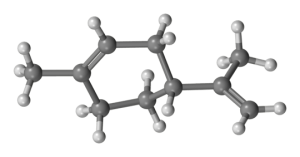
Limonene is a natural terpene that gives citrus fruits their distinctive aroma and flavor. It is used as a flavoring and fragrance ingredient in foods, beverages, and cleaning products, and as a supplement due to its potential health benefits, such as improving mood and reducing stress. Although it is generally safe in food-level amounts, it may cause skin reactions and may interact with certain medications.
Chemical Classification: Limonene is a cyclic monoterpene, a compound found in the essential oils of citrus fruit peels such as oranges, lemons, and grapefruits.
Structure: It is a colorless and nonpolar liquid, meaning it does not dissolve in water but mixes with oils.
Applications and Uses
Food and Beverages: It is widely used as a flavoring agent in products such as soft drinks, chewing gum, baked goods, and puddings.
Fragrance: Its pleasant aroma has made it a popular ingredient in perfumes, personal care products, and aromatherapy.
Cleaning: Limonene is a natural solvent and degreaser that is used in many cleaning products.
Medical and Therapeutic Uses: It is used in supplements, and its potential therapeutic properties have been studied.
Potential Mental Health Benefits: Early studies associate limonene with improved mood and reduced stress.
Anti-inflammatory and Antioxidant Properties: Research indicates that it has antioxidant and anti-inflammatory effects.
Digestive Support: It may help with digestion and acid reflux.
Antimicrobial Properties: Some studies have demonstrated its antibacterial and antifungal properties.
Safety and Side Effects
Skin Reactions: Limonene may cause skin irritation or allergic reactions in some individuals, especially when used topically. It may also increase the penetration of other ingredients into the skin, which can increase sensitivity.
Drug Interactions: Limonene may affect how certain medications are broken down by the liver. If you are taking medication, consult a physician before using it as a supplement.
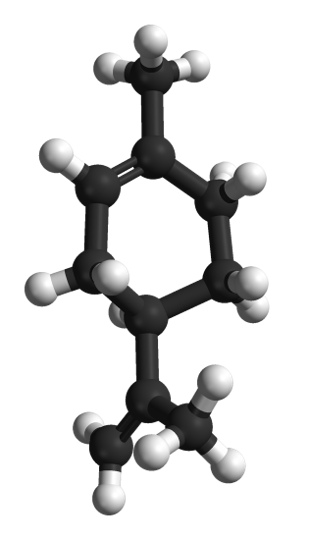
Beta-Pinene (β-Pinene)
Beta-pinene is a natural monoterpene found in the essential oils of plants and is used in the food, pharmaceutical, fragrance, and chemical industries. This compound is recognized as a valuable component in essential oil formulations and has been studied due to properties such as enhancing mental alertness and its potential effects on cognitive functions.
Beta-pinene is an organic molecule that is soluble in alcohol but insoluble in water.
It has a green-woody aroma similar to the scent of pine.
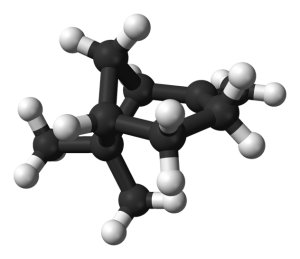
Beta-Pinene (β-Pinene)
Mental Alertness: Beta-pinene helps increase mental alertness and cognitive clarity.
Various Industries: It is used as a valuable compound in the food, pharmaceutical, fragrance, and organic chemistry industries.
Medicinal Properties: Research has been conducted on its potential benefits as a bronchodilator (airway dilator), pain relief, treatment of epilepsy and cancer, as well as neuroprotective effects.
Physical State: It is a colorless liquid.
Solubility: It is soluble in alcohol but does not dissolve in water.
Production: Beta-pinene is obtained through fractional distillation of turpentine oil.
Sources: In addition to citrus fruits, it is found in pine, pistachio, nutmeg, cannabis, cumin, black pepper, and other plants.
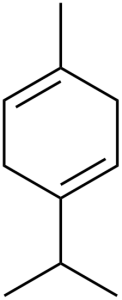
Gamma-Terpinene (γ-Terpinene)
Role: A softening and completing component of lemon aroma.
Characteristic: It has a mild, sweet, and warm scent that balances the sharpness of citrus notes.